David S. Fortney
DAVID S. FORTNEY
CO-FOUNDER
1909 K Street, NW, Suite 330, Washington, DC 20006
Tele: (202) 689-1200 | Fax: (202) 689-1209
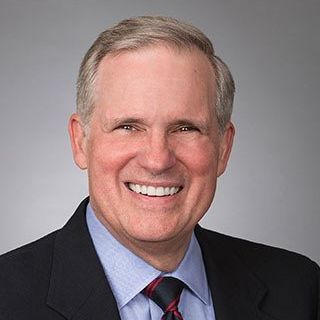
David Fortney is a co-founder of Fortney & Scott, LLC, a Washington, D.C.-based law firm counseling and advising clients on the full spectrum of workplace-related matters, including employment discrimination and labor matters, compliance programs, government contracting, and developing strategies for avoiding or responding to workplace-related crises.
Mr. Fortney has a broad-based practice representing and counseling employers and executives in employment and labor matters, including legal compliance with equal employment opportunity requirements and addressing pay equity initiatives and the evolving standards relating to inclusion and opportunity programs; wage and hour matters including Department of Labor audits and enforcement, and collective action litigation claims against employers; union organizing and collective bargaining; and, workplace health and safety. He brings experience from the private and public sectors in advising clients on these issues, and he frequently represents clients before federal agencies, including the U.S. Department of Labor’s agencies, the Equal Employment Opportunity Commission, and the National Labor Relations Board. Mr. Fortney also advises U.S. and global employers on pay transparency and pay equity laws including developing compliance strategies across the patchwork of requirements, modeling legally compliant compensation analyses, developing remediation strategies, and confirming accuracy of mandatory reporting.
Mr. Fortney has been widely recognized for his professional accomplishments, including being named one of the leading employment lawyers in Washington, D.C. by the CHAMBERS USA survey of America’s Leading Lawyers for Business. He also is recognized in The Best Lawyers in America, Washington D.C.’s, Washington D.C.’s Best Lawyers, and Super Lawyers. Mr. Fortney has received an AV rating (the highest level) by Martindale-Hubbell.
Before co-founding the firm, Mr. Fortney previously served as the chief and deputy legal officer of the U.S. Department of Labor in Washington, D.C. during the term of President George H.W. Bush. As Acting Solicitor of Labor, he was responsible for enforcing over 140 laws regulating the nation’s workplaces and managing an agency with 800 attorneys and support staff. He advised the Department of Labor agencies on a broad range of legal, policy, legislative, regulatory and enforcement issues.
Mr. Fortney’s expertise and experience has been requested in testimony before the U.S. Congress, and state legislative committees and before the Equal Employment Opportunity Commission and the National Academy of Sciences.
Mr. Fortney works closely in support of the employer compliance, training and outreach efforts by The Institute for Workplace Equality and the American Employment Law Council. He also hosts the DC Insider – Employer Update™ podcast, is a co-editor of the Federal Employment Law Insider monthly newsletter, and frequently presents at the leading bar association and professional meetings. He also has media experience, including appearances on CNN, CBS and Fox News.
Firm Practices
- Washington DC Expertise
- EEOC Compliance
- Inclusion and Opportunity
- International
- Federal Contractor Compliance
- Pay Equity
- Wage & Hour
- Workplace Investigations
Professional Activities
- American Bar Association, EEO Committee and former Labor and Employment Section Council Member (2 terms)
- American Employment Law Council, Treasurer and Member of Board of Directors
- College of Labor and Employment Lawyers, Fellow
- Employment Law Alliance, Member
- Federalist Society, Member and Former Chair, Labor and Employment Committee
- HR Policy Association, Member of Legal Council
- The Institute for Workplace Equality, Co-Founder and Co-Director
- U.S. Chamber of Commerce, Member of Labor Relations Committee
- Wage and Hour Defense Institute, Member
- Former Member, National Advisory Committee for Labor Provisions of U.S. Free Trade Agreements
Admitted to Practice
- District of Columbia
- Commonwealth of Pennsylvania
- U.S District Court of District of Columbia
- Supreme Court of the United States
Education
- Duquesne University School of Law (J.D.)
- The Pennsylvania State University (B.A.)
David Fortney's Speaking Engagements:
- 9/16/2026 – CHRO Association, “SESSION 6: The Future of Global Pay Equity and Transparency – Caring for Employees.” Read more and register here.
- 6/17/2026 – CHRO Association, “SESSION 4: Worker Categories, the 5% Gap, and Joint Assessments.” Read more and register here.
- 5/7/2026 – The Institute for Workplace Equality, “What Employers Need to Know: Debriefing Our Discussion with EEOC Chair Andrea Lucas.” Read more and register here.
- 5/7/2026 – The Institute for Workplace Equality, “Fireside Chat with EEOC Chair Andrea Lucas.” Read more and register here.
- 4/28/2026 – FortneyScott Webinar , “FAR Council Implements EO 14398: Federal Contractor Compliance Obligations Begin.” Watch here.
- 4/24/2026 – DC Insider – Employer Update, “DOL Update with Jonathan Berry, Solicitor of Labor.” Listen here.
- 4/24/2026 – Wage and Hour Defense Institute, “Washington and DOL Update with Administrator Andy Rogers.”
- 4/22/2026 – Pennsylvania Bar Institute – “The Trump Administration Changes – What Employment and Labor Lawyers Need to Know.”
- 4/16/2026 – Employment Law Alliance, “Inside Washington: Emerging Employment & Labor Law Trends in the US.”
- 4/9/2026 – The College of Labor and Employment Lawyers, “EEOC and DOL Priorities: A Conversation with Andrea R. Lucas and Jonathan Berry.”
- 4/9/2026 – FortneyScott Workplace Legal Compliance Webinar Series, “Part III: Trump Administration Increases DEI Pressure.” Watch here.
- 4/7/2026 – The Institute for Workplace Equality, “Understanding the New DEI Executive Order.”
- 3/18/2026 – American Bar Association, “From the Inside Out: An Analysis of Current Legal Trends by Former Government Practitioners.”
- 3/11/2026 – CHRO Association, “SESSION 1: Directive Overview and Impacts.” Read more here.
- 3/3/2026 – FortneyScott Workplace Legal Compliance Webinar Series, “Part II: What to Expect from DOL.” Watch here.
- 2/26/2026 – The Institute for Workplace Equality, “Take 5: Whistleblowers and Penalties: The Hidden Risks of the False Claims Act.”
- 2/24/2026 – DC Insider – Employer Update, “Trump Administration Continues to Push Against DEI.” Listen here.
- 2/19/2026 – American Bar Association, “A Perspective on Trends from the DOL and on a State Government Level.”
- 2/3/2026 – FortneyScott Workplace Legal Compliance Webinar Series, “Part I: What to Expect from EEOC.” Watch here.
- 1/26/2026 – Practicing Law Institute, “U.S. Department of Labor Wage and Hour Update – What to Expect from the Trump Administration.”
- 1/20/2026 – DC Insider – Employer Update, “State of Civil Rights Under Trump 2.0.” Listen
here.
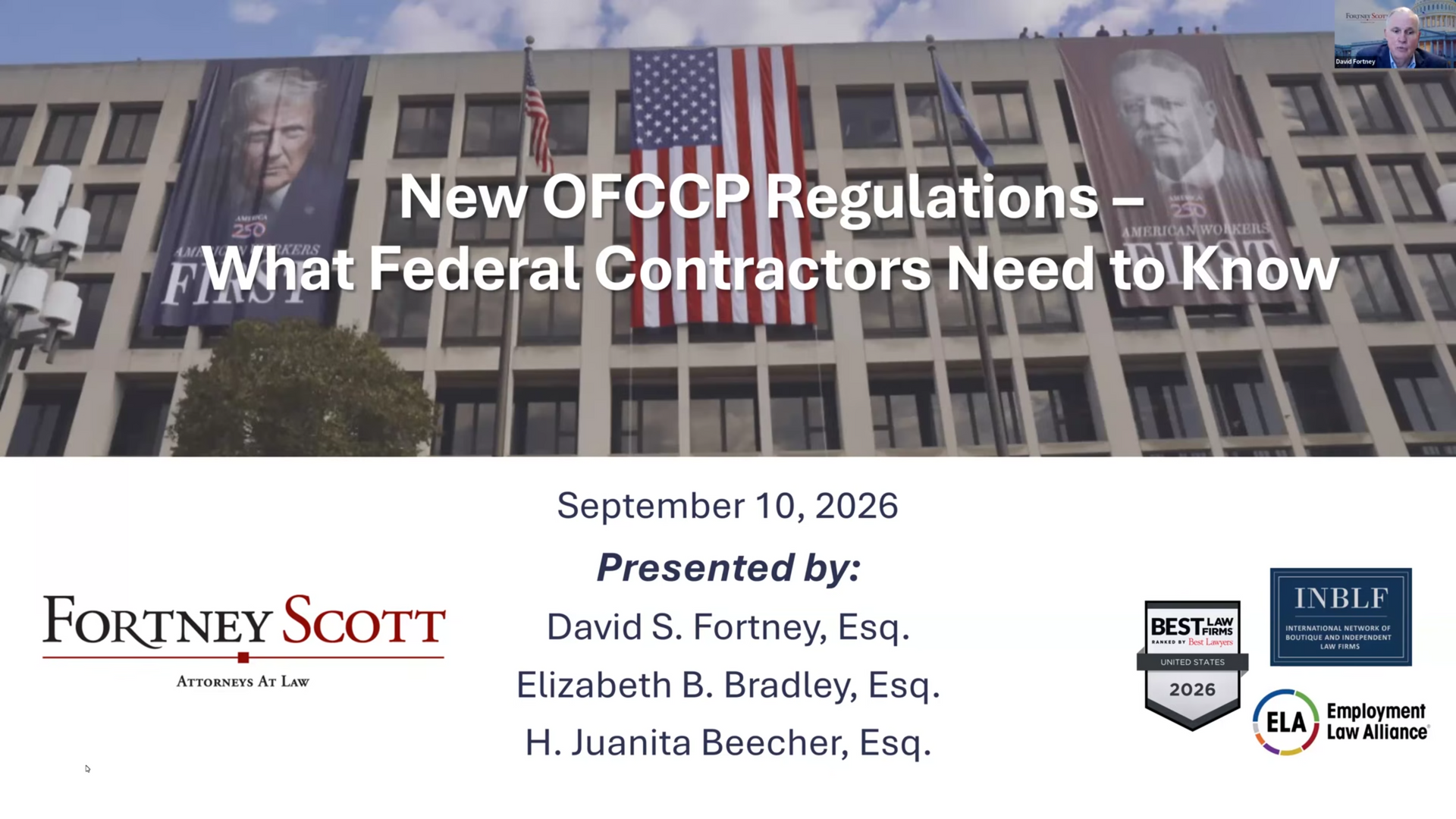
Register for FortneyScott's Webinar on New OFCCP Regulations – What Federal Contractors Need to Know