EU Pay Transparency Directive
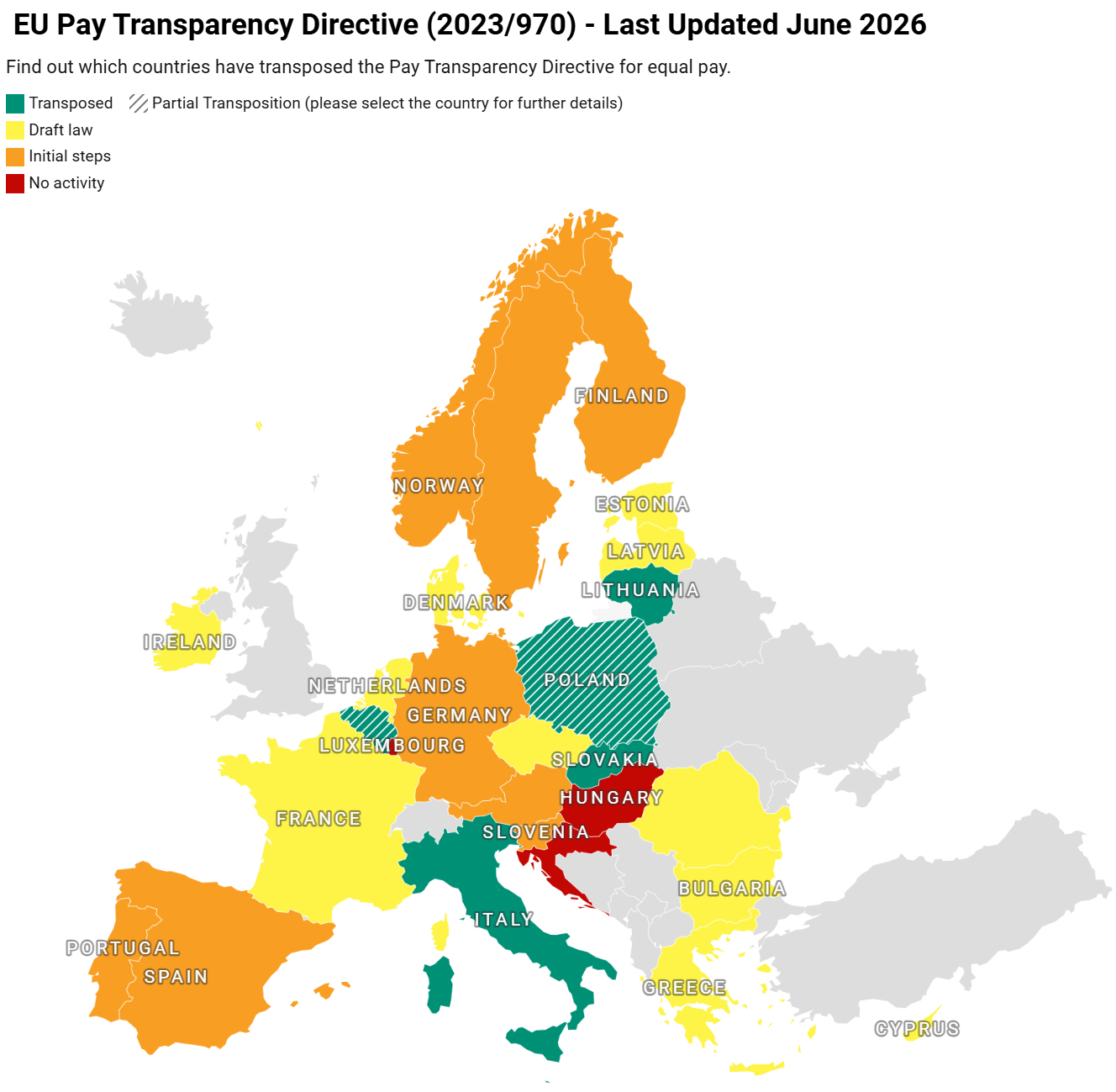
Multinational employers must navigate a patchwork of compliance obligations related to pay equity and pay transparency. For employers with workforces in the European Union (“EU”), currently each of the 27 EU Member States are transposing or preparing to transpose the EU Pay Transparency Directive (the “Pay Directive”) into national law by June 7, 2026. The Pay Directive provides the baseline, but each Member State may enact laws that provide heightened protection and/or enhance existing legal requirements.
What is the Pay Directive?
Directive (EU) 2023/970 is a binding European Union law passed in 2023 that establishes comprehensive pay transparency and gender‑pay‑equity obligations for employers. The Pay Directive aims to strengthen the principle of equal pay for equal work or work of equal value through data analyses.
What are the minimum compliance requirements under the Pay Directive?
Although Member States are free to impose stricter requirements when transposing the Pay Directive into national law, the Pay Directive’s baseline standards include:
- Gender pay gap reporting on an annual or triennial basis, depending on employer size.
- Analysis of pay differences within categories of workers performing the same work or work of equal value.
- Joint Pay Assessment with employee representatives when (1) a gender pay gap of 5% or more is identified, (2) the disparity cannot be explained by objective, gender neutral criteria, and (3) the employer does not remedy the gap within six months of the reporting date.
- Pay transparency in recruitment, including disclosure of salary ranges and a prohibition on salary history inquiries.
- Employee rights to pay information, enabling workers and worker representatives to request and obtain details regarding individual pay and comparable roles.
What are the reporting deadlines?
The Pay Directive requires, at a minimum, the following reporting:
| Number of Workers | Date of First Report | Reporting Period | Frequency of Reporting |
|---|---|---|---|
| 250+ | June 7, 2027 | Previous calendar year | Annually |
| 150-249 | June 7, 2027 | Previous calendar year | Every 3 years |
| 100-149 | June 7, 2031 | Previous calendar year | Every 3 years |
| >100 | Not required under the Pay Directive, but may vary by Member State law | Not required under the Pay Directive, but may vary by Member State law | Not required under the Pay Directive, but may vary by Member State law |
What should Employers do to prepare?
FortneyScott is actively tracking legislative developments across all EU Member States and advising clients on Member State-specific requirements as they emerge. Additionally, we are leading a multinational team of highly experienced EU-based attorneys to provide additional insights and advice. Our team offers the full range of critical services, including:
- Tailored, practical guidance for multinational employers preparing compliance strategies across multiple jurisdictions.
- Extensive experience in global pay transparency and pay equity compliance.
- A trusted network of local counsel throughout the EU to ensure coordinated and consistent cross-border compliance.
- Risk assessments, pay analyses, reporting readiness, and communication strategies aligned with the EUTPD.
For more detailed information about the EU Pay Transparency Directive and how FortneyScott can support your organization’s compliance strategy, please contact your FortneyScott attorney.
Recent Accomplishments:
FortneyScott, in recognition of the firm’s expertise and trusted guidance on emerging workforce regulations in the EU, was selected by the CHRO Association to lead its upcoming Virtual Masterclass Series on the EU Pay Transparency Directive.
The six-part series is designed to inform CHRO Association members, who are CHROs and senior HR leaders from America’s largest employers, about navigating the EU’s evolving pay equity and transparency regulatory landscape throughout 2026.
EU Compliance Network:
To help clients comply with the new Directive, FortneyScott established the EU Pay Compliance Network, a unique Network of carefully selected attorneys from key member states. Each attorney has extensive experience advising and representing employers on workplace compliance matters in their respective jurisdiction.
Through the Network, clients that engage FortneyScott gain access to local legal expertise, ensuring they receive up-to-date guidance on developments in the member states most relevant to their operations. Additional information about the Network attorneys is available
here.